The Enemy of the Sacred is Not the Secular
Updated: Dec 8, 2025
How should Christians missionally interact with the world that God has made? My professor, Nancy Pearcey, consistently reminded her students that our missiological duties extend not only to a direct ecclesiastical context but also to the secular world. Christian ministry is holistic in nature as we are following Christ, who is "in all things (ESV, 2001, Col. 1:17). Pearcey points out in her book, Total Truth, that our secular work is as spiritually significant as our sacred work and this leads me to believe that Christians should be encourage into a more robust idea of calling in the church today.
For example, professor Pearcey says, "Redemption is not just about being saved from sin, it is also about being saved to something — to resume the task for which we were originally created (Total Truth, 2004, p.47)." Pearcey goes on to say, "This means that our vocation or professional work is not a second-class activity, but rather something we do to put food on the table. It is the high calling for which we were originally created. The way we serve a Creator God is by being creative with the talents and gifts He has given us. We could even say that we are called to continue God's own creative work. Of course, we do not create from nothing, ex nihilo, as God did; our job is to develop the powers and potentials that God originally built into the creation—using wood to build houses, cotton to make clothes, or silicon to make computer chips (Pearcey, 2002, p. 47)."
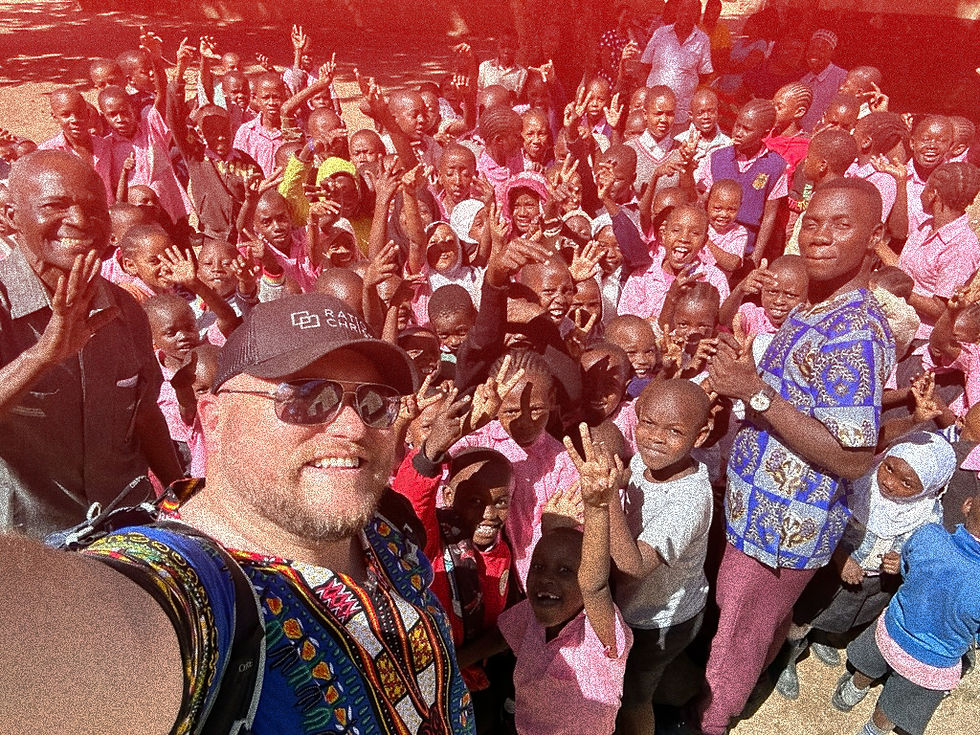
These ideas are key to understanding how to reach the world for Christ. I have the distinct privilege of being a missionary who benefits from the support of God's people to do the work of full-time ministry around the world. I cannot see how it would be practical to have a secular job while being away from home for several weeks a year and often working upwards of 50 hours per week. But for others, I have seen how a secular job is necessary to their mission.
One example of the necessity of secular work in missional contexts is when missionaries minister in places where it would be impossible to witness for Christ publicly. I was once approached by a student who intended to spend a year abroad to minister to an unreached people group in a closed country. Her method was going to be a barista ministry. She was going to work at a coffee shop on a college campus to bring the gospel to college students. This strategy was brilliant, and we readily started giving $100 a month to the cause. In sum, her secular vocation, when sanctified to God, became her ministry, and I believe this has been God's design all along.
There is an article in The Oxford Handbook of Mission Studies (2022) by a Dr. Kung's aligns with Pearcey's idea of vocation as calling when he said, "…in God's mission, creation is invited to be God's co-worker, no matter whether creation is aware of it or not. This is a gift from God." (p. 278) All people are created uniquely with sure gifts and callings. Some are called to the church while others are called into secular vocations. The Christian mission must seek to redeem every aspect of God's world. I found Kung's words to be very much aligned with Pearcey's idea of cultural redemption,
Salvation is not a renewal of the past but a new creation. The unity of creation and salvation must be eschatological. However, eschatology is not understood as a denial of human effort and achievement, but as the Kingdom of God coming to the world. The world is where God the Father sends his Son and Holy Spirit, and where salvation takes place. The church is created and called to witness to God's kingdom and participate in God's mission (Kung, 2022, p. 279).
Kung has provided a healthy view of Christian ministry within the secular world. Medical ministry is one such field in which practitioners can use medical skills in a secular environment to the glory of God. I have a dear friend who has spent several years in a closed Muslim majority country as a pharmacy tech. While there, he would bring up gospel conversations through asking genuine questions about Biblical figures in the Qur'an. This tactic is beneficial when dealing with difficult cultures that do not allow public Christian witness and are often riddled with evangelism laws.
Applying such secular vocations to one's missiological strategy is something that was made vivid to me in the trauma ministry that Flichett-Climenhaga and Lakawa highlight in an essay in the Oxford Handbook to Mission Studies (2022). Their insight into trauma ministry through psychological treatment was very moving, given its necessity and powerful witness. Their situational question moved me.
Practicing mission in the context of violence, forcible displacement and migration, human trafficking, and natural disasters requires reengaging questions of God, suffering, faith, and healing from a trauma perspective. Trauma poses complex questions for the discourse and practice of healing mission. What kind of healing mission is needed in the aftermath of violence and disasters (Flichett-Climenhaga & Lakawa, 2022, p. 303)?
A Dutch missionary named Masja found my hometown in Appalachia on a map and decided to start a holistic medicinal practice there. She lives very meagerly and serves my home community of Jackson, Kentucky, with vigor and grace. She charges very little for her services and even works out payment plans with our people. She understands the poverty culture there and the health issues that follow. For the last twenty or so years, Masja has done a lot to help our people and has made a significant impact in the community. She calls her ministry "Appalucky Mission." Though she is still considered an outsider by our very emically-minded, hobbit-like culture, her effectiveness in counseling and general health and wellness has been testified to by many.
In conclusion, whether you are a supported missionary, a bi-vocational, or a vocational minister, may the gospel still go out through your public witness. Those of us who are privileged to be in full-time ministry should always encourage others to be missionaries where they live. For some of us, that can mean a global ministry in several contexts throughout the year; for the stay-at-home mom, the schoolteacher, or CEO, it can mean a daily routine that seems ineffective compared to the numbers and so-called glamor of full-time ministry. Perhaps this reflection has renewed in me a responsibility to encourage every believer to be a gospel witness everywhere, whether in the marketplace or the church.
Sources
Kung, L. Y. (2022). Christian mission and social action. In K. Kim & A. Flichett-Climenhaga (Eds.), The Oxford Handbook of Mission Studies (First Edition, pp. 274–289).
Lakawa, S. E., & Flichett-Climenhaga, A. (2022). Mission and healing: Witnessing in the aftermath of trauma. In K. Kim & A. Flichett-Climenhaga (Eds.), The Oxford Handbook of Mission Studies (First edition, pp. 293–307). Oxford University Press.
Pearcey, N. (2015). Total truth: Liberating Christianity from its cultural captivity (Study guide ed.). Crossway.
Support Our Mission!
College students across the world are being led away from Jesus by ungodly ideas in universities, and we are doing something about it! Please consider partnering with us as we travel the world, planting apologetics and evangelism university missions that endeavour to transform lives and change the culture!
Every tax-exempt gift you give will be poured into the global apologetics and soul-winning mission of Ratio Christi International.
You can give by following the link here: https://give.ratiochristi.org/ministry/international-special-project
Check Instructions:
Make Checks out to "Ratio Christi" & write
"International" in the memo line.
Mail checks to:
Ratio Christi Inc. PO Box 10937 Merrillville, IN 46411-0973


Comments